
Because the world faces the joint calls for of a rising inhabitants and an environmental disaster, Morocco’s OCP Group, the world chief in phosphate mining and fertiliser manufacturing, has redoubled its efforts to extend fertiliser manufacturing whereas decreasing its carbon footprint.
As custodian of the world’s largest reserves of phosphate, OCP performs a key position in feeding future populations and takes the dangers of local weather change very significantly.
Humanity right this moment consumes way more sources than the planet can supply, and the ecological harm will nearly definitely worsen because of inhabitants and financial progress. OCP’s problem is subsequently to satisfy rising consumption wants with a purpose to assure meals safety, whereas utilizing a minimal of sources.
Mining and processing phosphate, nonetheless, is an energy-intensive business, and OCP is investing closely in analysis and know-how that can make these processes as environment friendly and sustainable as doable.
“OCP is working to satisfy demand for phosphate, whereas on the identical time rebalancing our environmental influence and changing it into constructive alternatives for the broader group,” says Hanane Mourchid, OCP’s chief sustainability officer. “With a view to obtain this goal, we have now carried out a number of roadmaps to satisfy our environmental, social and governance commitments, with the purpose of attaining carbon neutrality by 2040, whereas assembly 100 per cent of our electrical energy wants by means of clear sources in 2026.”
Working in direction of sustainable fashions
OCP is dedicated to enjoying its half in curbing world greenhouse gasoline emissions in keeping with Moroccan and worldwide sustainable growth objectives. This implies, respectively, reducing 45.5 per cent of greenhouse gasoline emissions by 2030, and conserving world warming under 2ºC.
The group can also be progressively aligning its sustainability report with the suggestions of the Activity Pressure on Local weather-Associated Monetary Disclosures (TCFD) to stay clear on its path to carbon neutrality by 2040.
The corporate’s purpose shouldn't be solely to adapt its core actions, however to enhance training and lift consciousness internationally, specializing in local weather change mitigation, adaptation, influence discount and early warning techniques. Its local weather motion and decarbonisation programme lays out a roadmap that ensures industrial growth whereas staying on monitor to change into carbon impartial.
To realize its bold environmental targets, OCP is becoming a member of forces with strategic institutional and financial companions within the personal sector, such because the Worldwide Fertilizer Affiliation (IFA) and the World Enterprise Council for Sustainable Growth (WBCSD), in addition to organisations that monitor sustainability, such because the Science Based mostly Targets initiative (SBTi), which offers assurance that the OCP decarbonisation technique is in keeping with Paris Settlement objectives and is supported by scientific proof.
“The land sector is the supply of 95 per cent of meals and agriculture manufacturing, and is essential for combating local weather change. OCP fulfils its position in halting soil degradation by selling greatest administration practices, investing in R&D and supporting efforts to incentivise farmers. These efforts purpose to cut back world emissions and discover the total potential of land to assist take away carbon dioxide from the environment,” says Naoufal Mahdar, OCP’s vp of local weather motion and decarbonisation.
Progress in direction of clear power transition
OCP is making quick progress in direction of its goal of assembly 100 per cent of its electrical energy wants by means of clear sources by 2026 and is already at 87 per cent. The corporate is more and more capable of supply its power from wind and photo voltaic, and is engaged on clear options to its fossil gas consumption (heavy gas oil and pure gasoline).
OCP is at the moment developing photovoltaic farms with the capability to generate 1.2GW , and the primary part shall be in service by 2024. In whole, the corporate is investing US$2.3 billion within the power transition program. One other key a part of its power plan is the adoption of power storage. By storing clear energy, OCP can profit from windy and sunny intervals and retailer energy for nights or occasions when situations will not be as beneficial.
OCP can also be capable of reuse the warmth waste from its industrial amenities with a purpose to generate clear electrical energy (cogeneration). In 2021, cogeneration at OCP produced greater than 3,000 GWh of electrical energy, guaranteeing a superb steadiness in power administration.
The group can also be working to handle the impacts of ammonia manufacturing, which at the moment accounts for a couple of per cent of worldwide CO2 emissions. Together with its companion, the Mohammed VI Polytechnic College, OCP is creating viable and sensible inexperienced ammonia options (produced from renewable power) to permit the substitution of imported ammonia (produced from fossil fuels) and extra options based mostly on inexperienced hydrogen manufacturing.
Moreover, OCP has created platforms devoted to the analysis of sustainable options, that are exploring innovation tasks within the discipline of unpolluted power and new energies.
Remodeling water administration
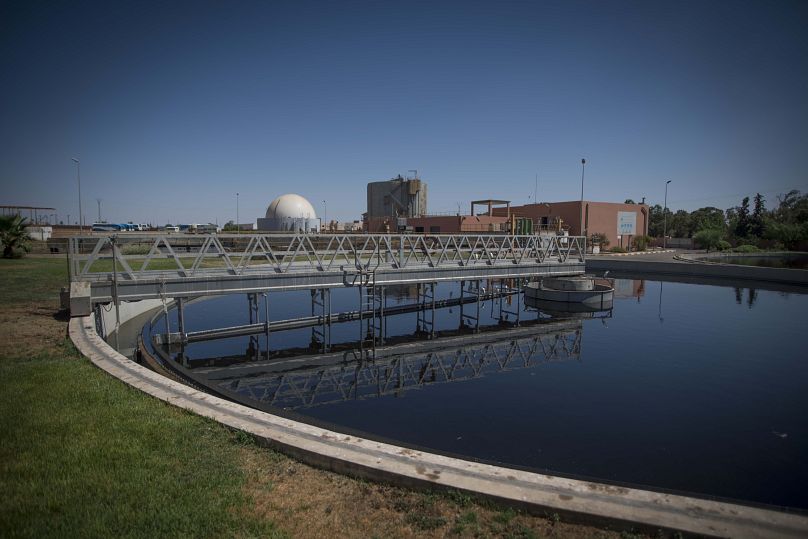
Increased common temperatures and extra excessive, much less predictable climate situations, equivalent to heatwaves, droughts and heavy rainfall, are more and more impacting the provision, distribution and high quality of water in Morocco, a rustic with water shortage. OCP’s mining and processing websites each depend on water, and the group has developed a water administration program hinged on water effectivity measures and using non-conventional water sources – handled wastewater and desalinated seawater – that can cowl 100 per cent of its wants by 2026.
To satisfy the rising want for its fertilisers, OCP expects that its water consumption will triple by 2028. In 2008, the group started to part out using recent water in its operations, and has since launched into an bold sustainable water programme, utilizing revolutionary methods and different sources that can allow it to carry the necessity for recent water all the way down to zero by 2026.
OCP’s incorporation of water from non-conventional sources elevated from 3 per cent in 2010 to 30 per cent in 2018. Because of important funding on this space (US$360 million thus far), OCP has been capable of construct three wastewater remedy crops and a desalination plant for its personal use.
“OCP’s water-management scheme is predicated on two pillars: rationalisation and using non-conventional water sources,” mentioned Karim Saoud, OCP’s vp of water and power.
“The programme is designed to optimise our water use, rework our processes, and put money into the R&D that can discover even higher methods to cut back our water use. We work on sensible merchandise and practices to supply options for water-scarce agriculture. We offer spare capability for native communities to answer the pressing water disaster and improve well being and prosperity.”
“By combining city wastewater remedy with desalination, we're making extra freshwater accessible to the opposite customers, notably to be used as consuming water and for agriculture.”
Future desalination models, slated to be accomplished in 2022, will cowl the water wants of its foremost websites in Jorf Lasfar and Safi. The water saved on this approach shall be redirected to be used within the Oum Er Rbia basin and the cities of El Jadida and Safi.
Develop local weather sensible merchandise & providers
The methods through which the local weather is altering, from rising temperatures to modifications in precipitation, is more and more impacting the way in which crops develop all all over the world. To supply farmers with sustainable solutions to the depletion of pure sources and growing rules, OCP is constantly enhancing its product and providers to create sensible agriculture embedding the 4R's nutrient stewardship framework – proper supply, proper fee, proper time, proper place.
That is structured round: (i) Offering farmers with native infrastructures, equivalent to mixing and storage amenities, and minimising provide chain disruption attributable to climate. (ii) Creating customised merchandise tailored to the evolution of the soil crop surroundings system and to grab alternatives for climate-smart merchandise. (iii) Designing digital instruments to allow farmers to make the fitting selections.
Post a Comment