

It’s no secret that Black ladies are caught within the crosshairs of violence — not simply when encountering the police, however in our personal communities and houses. Regardless of Black Lives Matter being sparked by three Black ladies, the motion’s efforts typically middle on the misplaced lives of Black males and boys. In the meantime, ladies resembling Sandra Bland, Breonna Taylor, Oluwatoyin Salauand Riah Milton obtain a fraction of that very same assist, outrage and empathy.
Who's saying their names? Most significantly, why does it look like their lives matter much less?
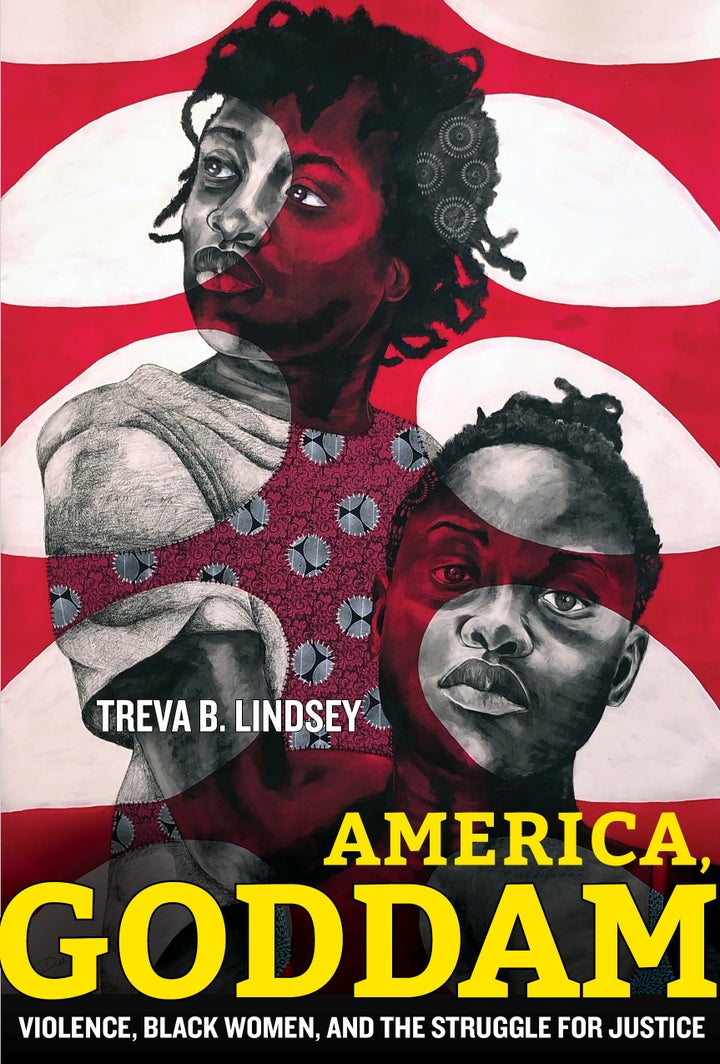
In Treva B. Lindsey’s new e book, “America, Goddam: Violence, Black Girls, And The Wrestle For Justice,” the Ohio State professor not solely says their names but additionally gives readers a wealthy fusion of historical past, information and eye-opening private experiences to inform a 100-year-plus story about how and why the difficult violence we encounter exists and the components and buildings that uphold and profit from that violence.
slavery, intracommunal violence, medical mistreatment and poverty, Lindsey explores how the intersections of capitalism, anti-Blackness and misogyny are a relentless pressure in Black ladies’s lives, however she additionally carves out house for hope and what freedom can imply for Black ladies — the correct to stay “a habitable life” in America.
HuffPost sat down with Lindsey to debate what prompted her to put in writing about Black ladies and violence, sexual assault by the palms of police, and the way, regardless of all the things, she continues to remain hopeful.
Are you able to clarify the title “America, Goddam” and its connection to Black ladies and violence?
Nina Simone’s music is at all times a spot I'm going to after I’m writing and considering. I modified the e book’s title to this as a result of her track “Mississippi Goddam” simply spoke to me in a sure means. She’s laying out all these completely different locations the place hurt is occurring, and in my e book, I’m trying on the historical past of the U.S. and the hurt we face. It’s not simply in a single state or the South, however in all places. Once I hear about one other rape, one other sexual assault, one other serial predation, my response is “Goddamn.”
Nina’s additionally calling out what’s occurring to Black of us within the ’60s, and figuring out the wrestle and protest. In the meantime, I’m calling out what’s occurring now and what has been occurring. So long as we now have a “goddamn” response to what America does, we will likely be warring in opposition to that.
And I might love a world wherein we’re not at battle, however we’re deep in it proper now. Just like the track, the e book is tough and melancholy and lays out the historical past and the stakes. However there’s additionally a hearth that undergirds all of it and believes that Black folks will develop and persevere.
Why was this the e book you needed to put in writing now?
The e book I used to be supposed to put in writing was about Black ladies, the ’90s and hip-hop soul, however the concept of the violence we face saved me up at evening. A part of this was going again to what the phrases had been telling me, what the tales had been telling me, what my convictions had been telling me, and whether or not I felt geared up to put in writing the e book. This e book simply felt inevitable, despite the fact that I didn’t wish to do it, sit with it or cope with it. However I began writing it anyway and made positive to ask myself exhausting questions as a result of these matters are very heavy.
How do you do this kind of venture with out exploiting the tragedy? How do you inform these tales and invite folks in with out their trauma? No shade to anybody else, however there’s an inclination to do that work and do it in a means that I don’t suppose is essentially moral or accountable. I needed to method this in another way.
The heaviness is actual. Each time Megan Thee Stallion’s title is trending, particularly round Tory [Lanez], I get a pit in my abdomen. I do know to not look, however I have to, even when it makes me really feel hopeless. We will’t stroll away from the grasp misogynoir has on our lives.
These matters are so heavy, however we now have to speak about them. Ignoring them isn’t going to make all of it proper. I discuss a bit about Megan within the e book, nevertheless it bodily and emotionally hurts watching it unfold in actual time. It’s exhausting to see folks lining as much as low cost her, name her a liar, after which rally across the particular person she has alleged harmed her in strong and highly effective methods. They're mentioning his title as a result of they wish to defend him, not as a result of he's a unbelievable artist, however as a result of they merely wish to defame her.
With this in thoughts, the e book was an try at a radical sort of honesty, particularly within the chapter about intracommunal violence, which was essentially the most difficult chapter to put in writing. I needed to be forthright about what it means to endure violence and unequivocally shield those that hurt us silently. There’s not only a value to that for us, however one for Black males and boys, too. Patriarchy kills all of us. I want extra of us, together with sisters who defend abusers, may see that and wish to divest and dismantle it.
The opposite tough half in writing about this kind of violence is that I’m calling in individuals who I like. I’m calling in folks that I really feel ought to be writing alongside us. However I additionally know this e book couldn’t exist if I didn’t speak about violence in opposition to Black ladies and ladies and never embrace it.
One of the highly effective factors you make within the e book is the thought of our houses being such a potent supply of hazard for Black ladies, particularly with regards to police violence. For us, it’s not nearly being pulled over on the streets.
Completely, it’s mind-blowing. Once I take into consideration the police violence so many Black ladies encounter, I consider how a lot of that occurs in our houses — the personal sphere we don’t see within the public. We don’t see that as structuring the general public methods we take into consideration anti-Black violence or the logic of white supremacy working. However the house isn't proper, whether or not that’s coming from inside it or these coming into. So whether or not it’s Aiyana Stanley Jones being asleep on the sofa and the police killing her throughout a failed raid, or Breonna Taylor being asleep in her mattress subsequent to her companion and being killed, once more on a failed raid. Or Atatiana Jefferson being house and a neighbor considering one thing was mistaken. Or Deborah Danner, or Tanisha Anderson, and we will go on and on when it comes to how the house turns into this visceral website for police violence.
Then, we now have to have a look at the house and the way over 90% of Black femicides are perpetrated by somebody that this Black girl or woman knew. The house is harmful; the house is unsafe. What house could be for Black women and girls turns into thrown into this chaos as a result of it’s each an exterior and inner battle to not be rendered susceptible to deadly or irreparable hurt.
You additionally deal with that police violence in opposition to Black ladies isn’t solely being shot or killed. It additionally contains sexual assault. Why was that an vital level to make?
It is so vital, but we don’t speak about it sufficient. I wrote a three-part collection for Cosmo about ex-police officer and predator Daniel Holtzclaw, who was convicted of sexually assaulting Black ladies and ladies. He knew who to prey on: those who had been criminalized for drug habit and different minor offenses, and their ages vary from 17-year-old younger ladies to ladies of their 50s. Sadly, these are usually not unusual situations. Sexual misconduct is essentially the most important police misconduct amongst ladies, particularly focusing on Black ladies and ladies. This contains all the things from asking folks to take away their tampons or being sexually assaulted whereas being pulled over.
Maybe one of many hardest components of the e book for me was writing about my very own encounter with sexual violence and policing, which I had by no means talked about earlier than outdoors of my therapist. It was exhausting to say I've a #MeToo second, however you notice that you simply’re not alone. What I encountered was not an distinctive expertise however reasonably one that's indicative of how sexual policing is occurring all through this nation. Whereas Holtzclaw is an distinctive case as a result of we received the trial, a conviction and sentencing, there are definitely extra circumstances that we by no means hear about.
Although your e book tackles these darkish themes, you make certain to speak about hope, calling it a “self-discipline.” With all the things Black ladies face, how do you keep hopeful?
Hope resides in that energetic apply that I’m participating in day by day. The excellent news is that so many people are doing the work — writing books or articles, organizing, creating movies and artwork, constructing neighborhood — to interrupt and intervene in violent encounters. I imagine in these prospects as a result of we’ve seen what our ancestors completed. And at some point, we will likely be ancestors, and the work we do will reply the query: What's the world we wish to depart behind? What we create, think about, envision, and love regardless of all the things is hopeful. Had all that been crushed and crushed out of us, I would lose hope. However each day, I get up with causes to imagine in us.
You finish the e book with this lovely letter to Ma’Khia Bryant, the younger woman in foster care killed by a Columbus, Ohio, police officer in 2021. What urged you to do this?
All the things was set for manufacturing, and the identical day the Derek Chauvin responsible verdict got here in was the day Ma’Khia was killed. And I sat at house processing. Not simply as a author, historian or professor, however as a Black girl who lives in Columbus, who's related to the communities feeling the brunt of this youngster’s killing. What does it imply to form a world that cares for Black ladies like Ma’Khia within the foster care system, which rips Black households aside at unprecedented charges? Or to really feel that the one choice was to name the police, who we all know don’t serve Black ladies properly.
I additionally thought quite a bit about her TikTok movies, laying down her edges, and people candy moments. She ought to be right here, but additionally, her title ought to be a part of this venture. So, I instantly emailed my editor, “I don’t understand how, however this must be in there, and I'm not even positive what which means, however when you give me every week and pause manufacturing, I can determine it out.” Fortunately, my editor mentioned, “After all.” The letter is about her life, the probabilities of what she may have achieved had she lived, and the recommitments I've to tackle in her title, even when it will get exhausting, as a result of there’s no justice for her.
This interview has been edited for readability and size.
Post a Comment